What gets taxed
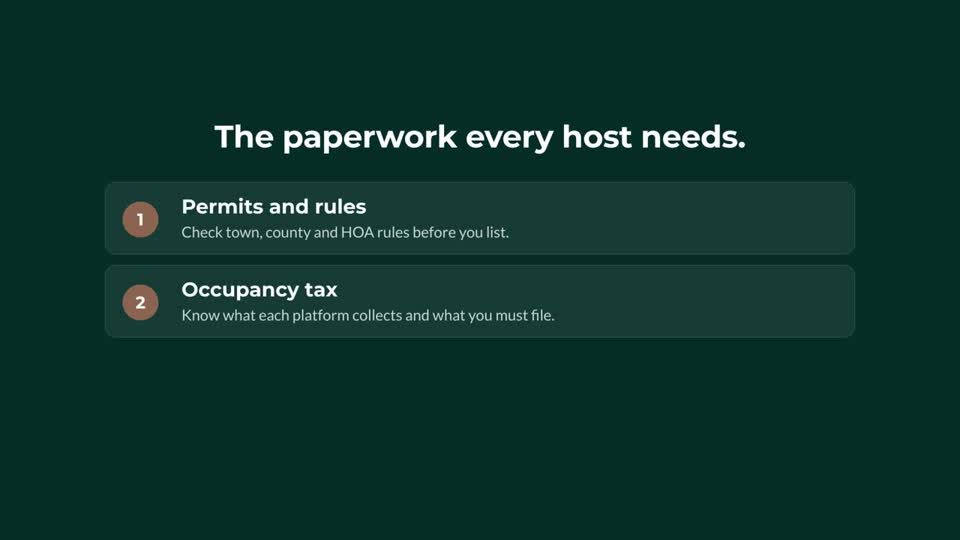
Stays shorter than a set length, often 30 days, are usually subject to some mix of state sales tax, a state occupancy or hotel tax, and county or city occupancy taxes. Rates and rules vary widely by location.
 0:32
Who collects it
| Platform | Collection |
|---|---|
| Airbnb | Collects and remits many state and local taxes automatically, but not all. Check your listing's tax details. |
| Vrbo | Collects and remits in some jurisdictions; elsewhere you add taxes yourself. |
| Booking.com | Usually you set up the taxes per property and remit them yourself. |
| Your own site | You collect and remit. |
Common mistakes
- Assuming a platform collects every local tax when it only collects the state portion.
- Different tax settings on different properties by mistake.
- Forgetting tax on direct bookings.
- Not registering with the town where registration is required.
Where to check
Your state's department of revenue and your town or county clerk are the authorities. Our market guides summarize the basics for the areas we know, with links to official sources.
This is general information, not tax advice. Rates change; confirm with your state, town and accountant.