The market
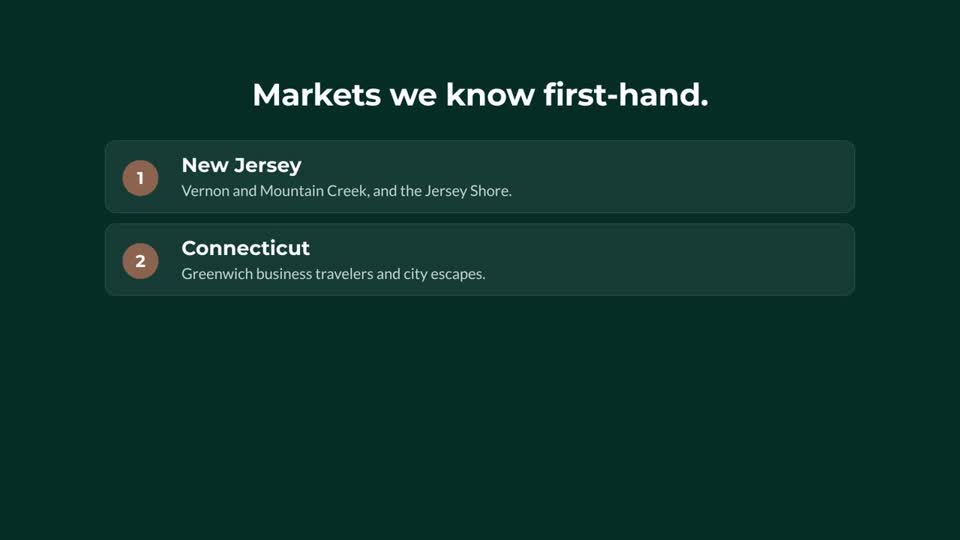
From Sandy Hook to Cape May, shore towns fill with families on Saturday-to-Saturday weeks in July and August, with weekend stays in June and September. Many guests return to the same town, and often the same house, every year.
 0:36
What guests expect
- Beach badges or passes, chairs and an outdoor shower.
- Parking details. Many towns have strict limits.
- Clear weekly turnover times.
New Jersey taxes on short stays
New Jersey applies 6.625% sales tax and a 5% state occupancy fee to most short-term stays. Many municipalities add their own municipal occupancy tax, commonly up to 3%. Airbnb and some other platforms collect state taxes for marketplace bookings, but check whether your town's tax is collected too, and remember you collect everything yourself on direct bookings. Official source: NJ Division of Taxation.
Town rules
Many shore municipalities require rental registration, inspections or certificates of occupancy, and some restrict short stays. Check with your town before listing.
Turn summer families into direct bookings
Shore families who love a house usually want the same week next year. A direct-booking site and an early offer each fall can fill next July before it ever opens on the platforms, at about 3% instead of 12% to 15.5%.
General information, checked November 2026. Rules and rates change. Confirm with your town, county and state before you list. Not legal or tax advice.